
Motorists across the UAE are set to enjoy substantial savings at the fuel pump this month after the UAE Fuel Price Committee announced a significant reduction in petrol and diesel prices for July 2026. The revised rates, which came into effect on 1 July, mark one of the largest month-on-month decreases in recent times, providing welcome financial relief for residents, businesses, and transport operators.
The latest fuel price revision follows several months of increases and reflects a decline in global crude oil prices during June. Since the UAE adopted a deregulated fuel pricing system in 2015, retail fuel prices have been adjusted every month based on international oil market movements, refining costs, and distribution expenses.
July 2026 UAE Fuel Prices
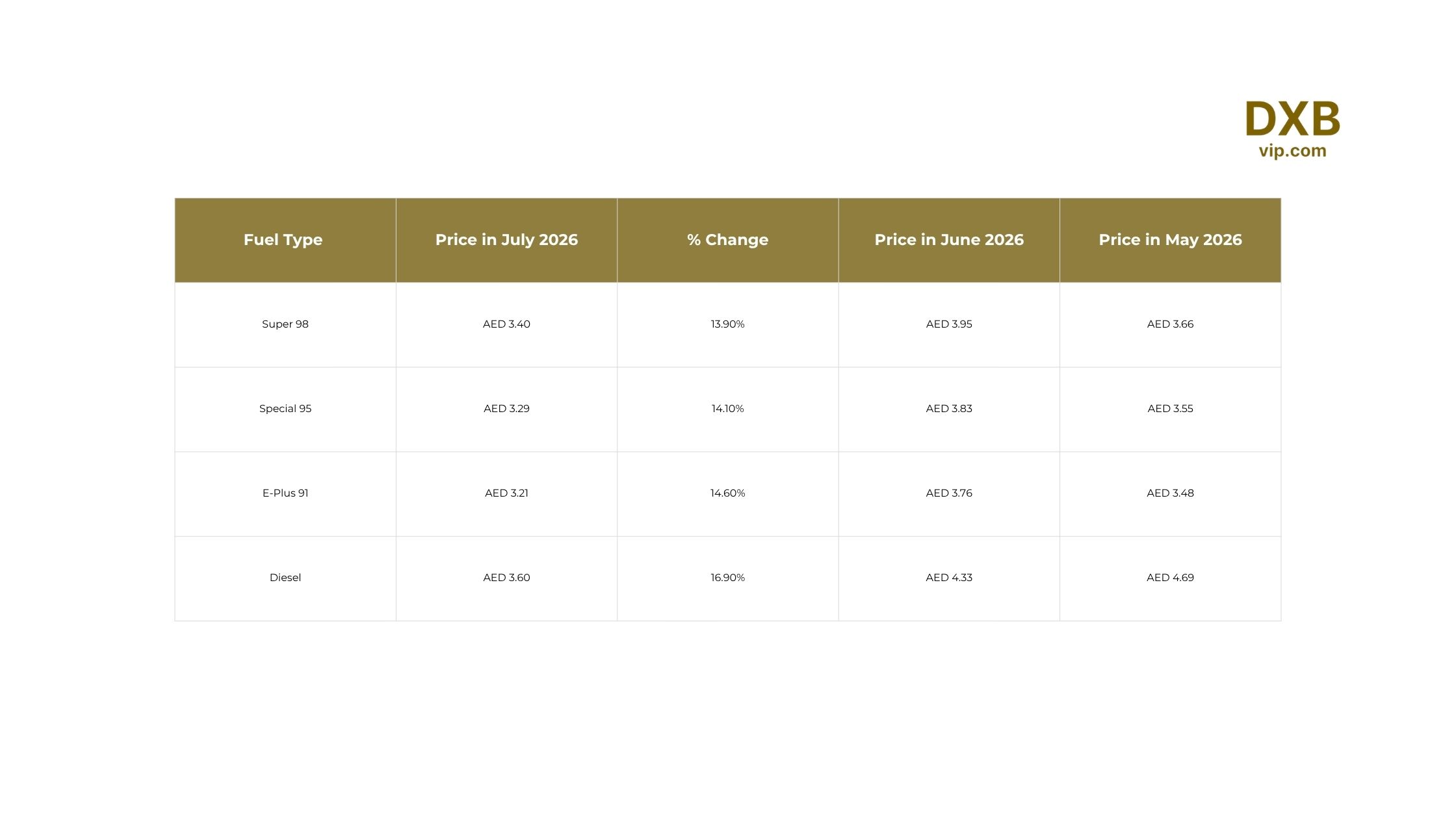
The official fuel prices for July 2026 are:
- Super 98: AED 3.40 per litre
- Special 95: AED 3.29 per litre
- E-Plus 91: AED 3.21 per litre
- Diesel: AED 3.60 per litre
Compared with the previous month, motorists will notice significant reductions across all fuel grades.
- Super 98 has fallen from AED 3.95 to AED 3.40 per litre, a decrease of approximately 13.9%.
- Special 95 has dropped from AED 3.83 to AED 3.29 per litre, down 14.1%.
- E-Plus 91 has declined from AED 3.76 to AED 3.21 per litre, representing a 14.6% reduction.
- Diesel has recorded the largest decrease, falling from AED 4.33 to AED 3.60 per litre, a drop of nearly 16.9%.
The revised prices provide immediate savings for anyone filling up their vehicle, particularly those who drive long distances or rely on their vehicles for work.
Welcome Relief for Motorists
The latest reduction comes as good news for UAE residents who have experienced higher fuel costs over recent months. Whether commuting to work, travelling between emirates, or using private vehicles for daily errands, drivers will now spend considerably less on fuel throughout July.
For example, filling a standard 60-litre fuel tank with Special 95 now costs approximately AED 197, compared with nearly AED 230 in June. Depending on driving habits, many motorists could save AED 30 or more every time they refuel.
Households with multiple vehicles and families who travel frequently are expected to benefit the most from the lower prices.
Businesses Also Stand to Gain
The impact extends well beyond private motorists. Businesses that depend on transportation are expected to see lower operating costs thanks to the decline in both petrol and diesel prices.
Logistics companies, courier services, delivery platforms, taxi operators, ride-hailing drivers, construction firms, bus operators, and commercial fleet owners all rely heavily on fuel. Even a small reduction in fuel prices can result in meaningful savings over time, particularly for companies operating dozens or even hundreds of vehicles.
Diesel users are likely to benefit the most this month. Since diesel powers many trucks, heavy machinery, and commercial vehicles, the 16.9% reduction could significantly reduce operating expenses across sectors such as logistics, construction, manufacturing, and freight transport.
Why Have Fuel Prices Fallen?
The UAE’s monthly fuel prices are closely linked to international oil market trends. During June, global crude oil prices eased due to improved supply conditions and softer demand expectations in several markets.
As international benchmark prices declined, the UAE Fuel Price Committee adjusted domestic fuel prices accordingly for July. The country’s fuel pricing mechanism ensures that local retail prices reflect international market conditions rather than remaining fixed throughout the year.
This system provides greater transparency and allows consumers to benefit when global oil prices fall, while also reflecting increases when international markets move higher.
Wider Economic Benefits
Lower fuel prices can positively influence the broader economy. Reduced transportation costs often help businesses manage expenses more efficiently, particularly those involved in logistics and distribution.
Although fuel is only one factor affecting the cost of goods and services, lower transportation expenses may ease pressure on delivery costs, supply chains, and commercial operations. Businesses that experience lower operating costs may also find greater flexibility in managing prices or improving profitability.
Consumers may also benefit indirectly through reduced delivery charges and lower transportation-related expenses across various industries.
Understanding the UAE Fuel Pricing System
The UAE deregulated fuel prices in August 2015 to align domestic fuel rates with international market conditions. Since then, the Fuel Price Committee has reviewed global oil prices at the end of each month before announcing retail prices for the following month.
This monthly pricing system allows fuel prices to move in line with global energy markets, ensuring greater transparency while helping consumers benefit when crude oil prices decline.
Because prices are revised every month, future adjustments will continue to depend on developments in the international oil market.
Looking Ahead
While July’s announcement is encouraging, fuel prices for August 2026 will depend on several global factors, including crude oil demand, production levels, geopolitical developments, refinery output, and seasonal consumption trends.
As international energy markets remain dynamic, motorists can expect monthly price revisions to continue in line with global conditions.
For now, however, the July 2026 fuel price update delivers welcome savings for millions of drivers across the UAE. With petrol prices falling by around 14% and diesel dropping by nearly 17%, residents and businesses alike can look forward to reduced transportation costs throughout the month, providing a timely boost to household budgets and business operations.